
Managed Objects
Teams, sites, apps and flows brought under a lifecycle with a start, a review point and an end.
ATHENTRA LIFECYCLE HUB
Microsoft 365 has no natural end. Teams, sites, apps and flows are created in a moment and then live forever — long after the project closed, the pilot finished and the owner left. The Lifecycle Hub gives every one of them a term, review points and an end. A finding from Compliance becomes a question for the people accountable rather than a ticket for IT: retain it, archive it or delete it, with a reason. Athentra records the decision and hands the work to your own automation or a person — it never reaches into your tenant to carry it out. Every decision and disposition is kept, with the state before and after, so the answer to “why is this still here?” is always one click away.
Book a Demo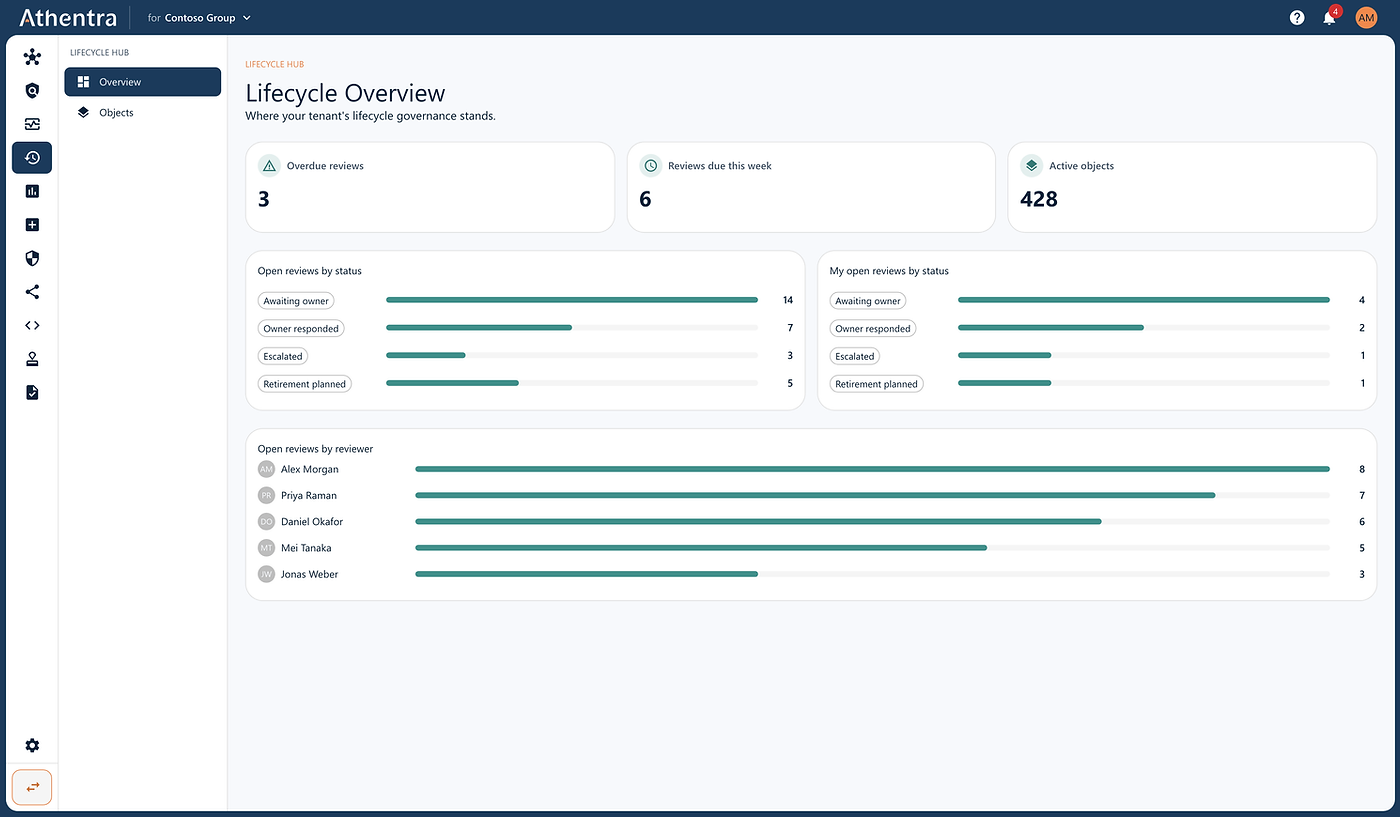
Teams, sites, apps and flows brought under a lifecycle with a start, a review point and an end.
A compliance finding becomes a question for the person accountable, not a ticket for IT.
Every review names its reviewers, and reminders go to them rather than to a shared mailbox.
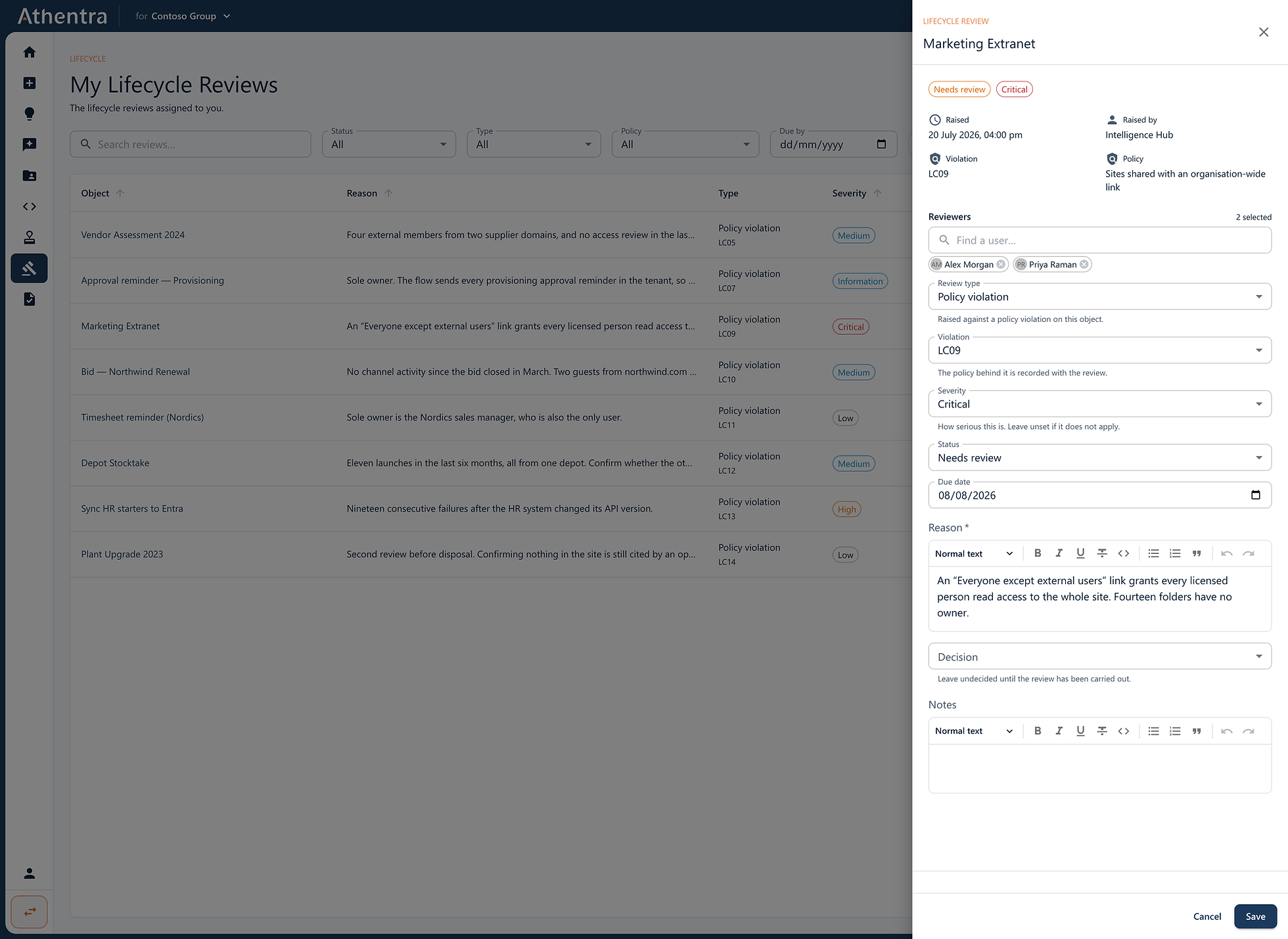
Keep it, archive it, or delete it — recorded against the person who decided, and the reason is required, not optional.
Archive or delete marks an object with a due date. Your own automation or a person does the work and reports back; Athentra never reaches into your tenant itself.
Each object is governed for a term. When it runs out unanswered, the rule raises a final review, notifies, or marks it for disposition.
Park an object for a later look without pretending the question is settled.
A review past its date is flagged, chased and escalated rather than quietly forgotten.
Objects created through Athentra carry that origin for the whole of their life.
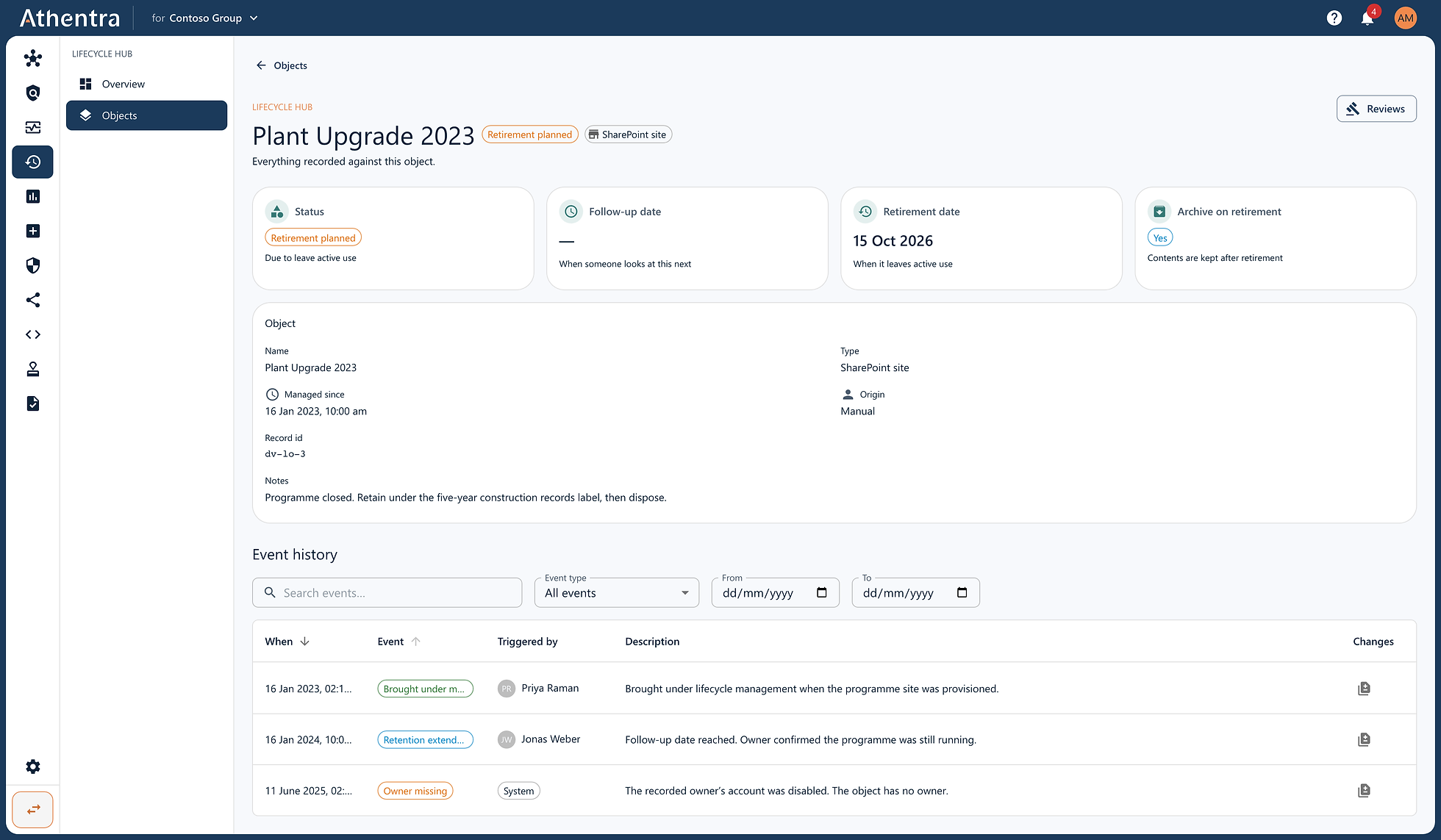
Every change kept, from active to marked to actioned, with who caused it and when.
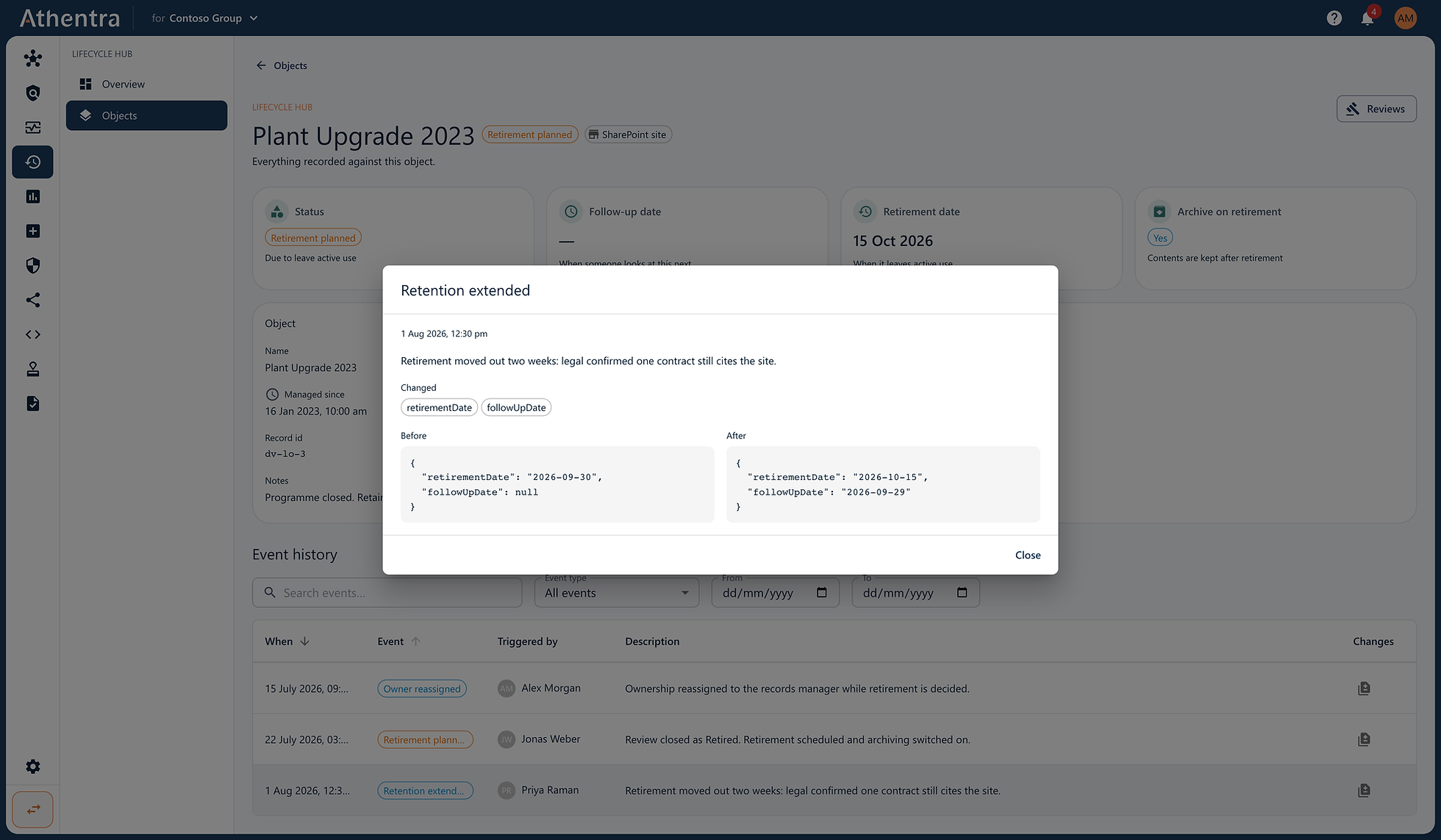
See exactly which fields changed on any event, and what they changed from.
An end-user surface holding only the decisions that are actually theirs.
A tour of Athentra Lifecycle
01/07
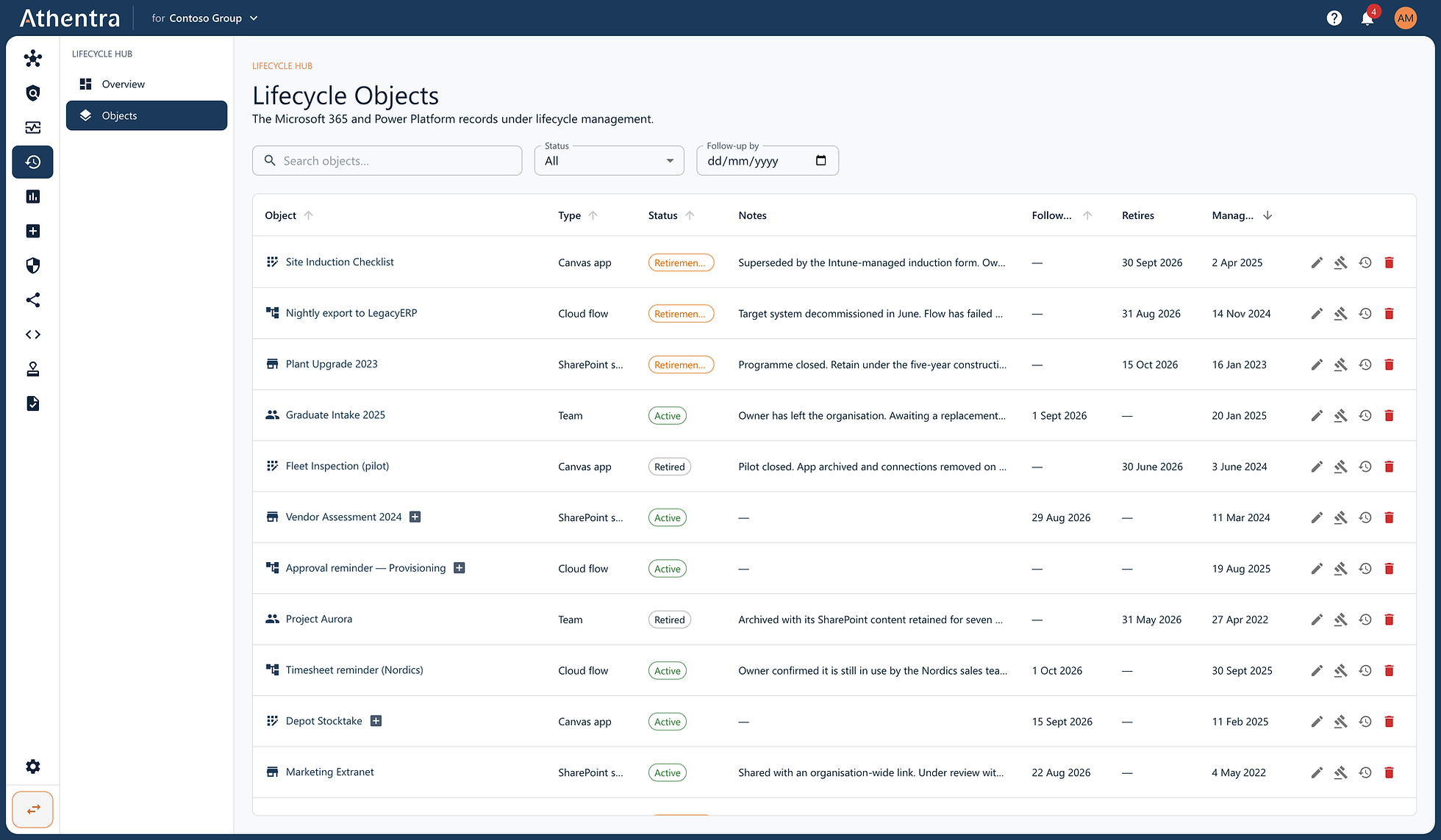
An app nobody has opened in six months, a flow failing since June, a site whose owner has left — each with its status, its notes and its next date.
02/07
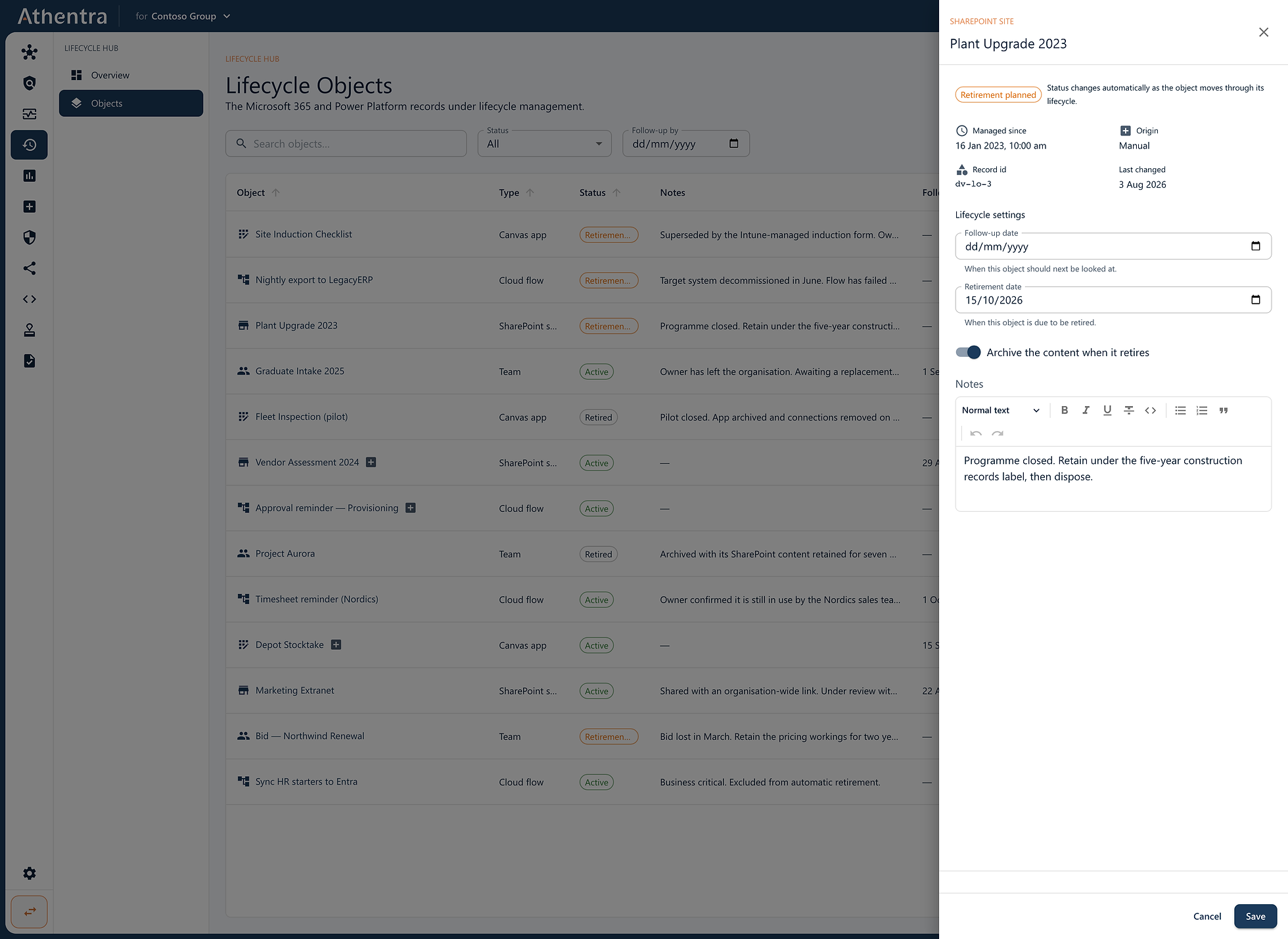
A disposition, a due date, and a reason saying why — recorded in one place and chased until it is settled.
03/07
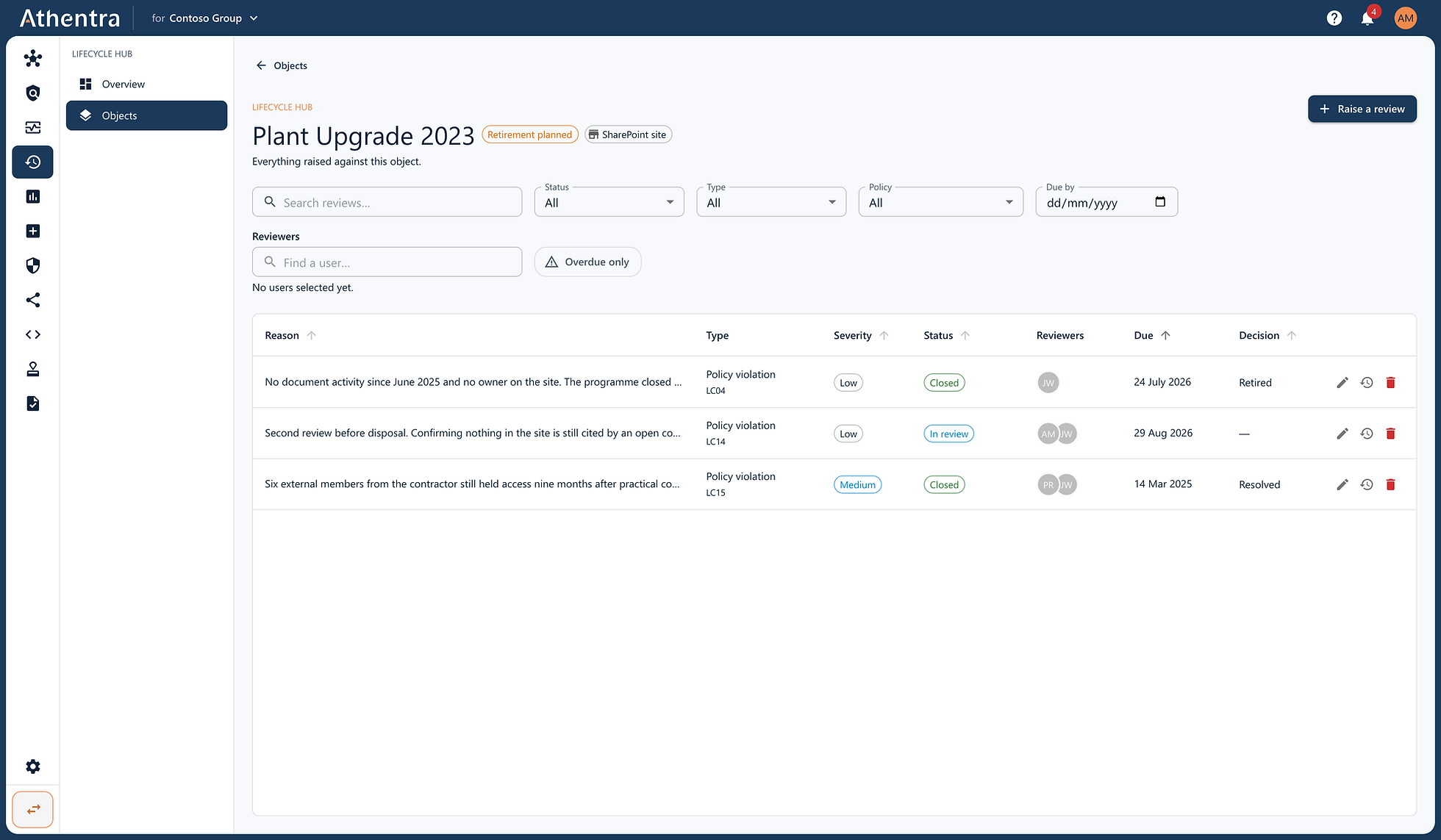
Every question ever asked about this site: who was asked, what they decided, and when it closed.
04/07
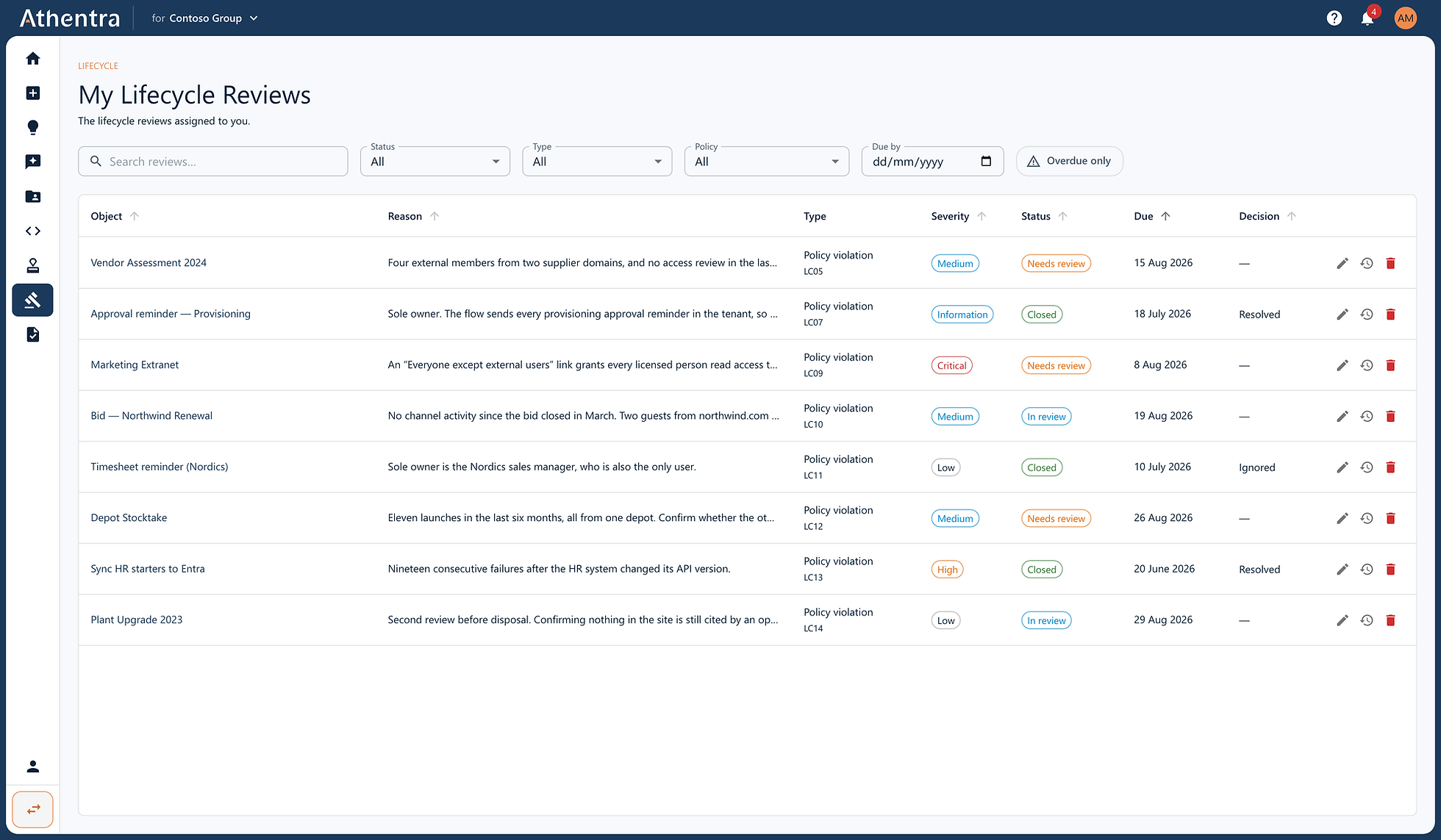
The owner sees only what is theirs to decide, with the reason it was raised already written down.
05/07
Retain, archive or delete. The reason is required, so the record answers “why” as well as “what”.
06/07
Managed, extended, reviewed, marked, actioned — the whole life of one object, with who caused each step.
07/07
The next review date moved out two weeks. The record names the fields that changed and keeps both values.
Most governance tools can tell you what exists. Far fewer can tell you why. The Lifecycle Hub keeps the question, the person it was put to, the answer they gave and the date they gave it. So an auditor, a new platform owner or a nervous executive gets a straight answer instead of an archaeology project.
Nobody takes governance on all at once. Most start from a single pressure — preparing for Copilot, reducing oversharing, cleaning up workspaces nobody owns, or getting ready for an audit — and widen from there. Athentra is built to be useful from the first of those, and to still fit when the rest arrive.